
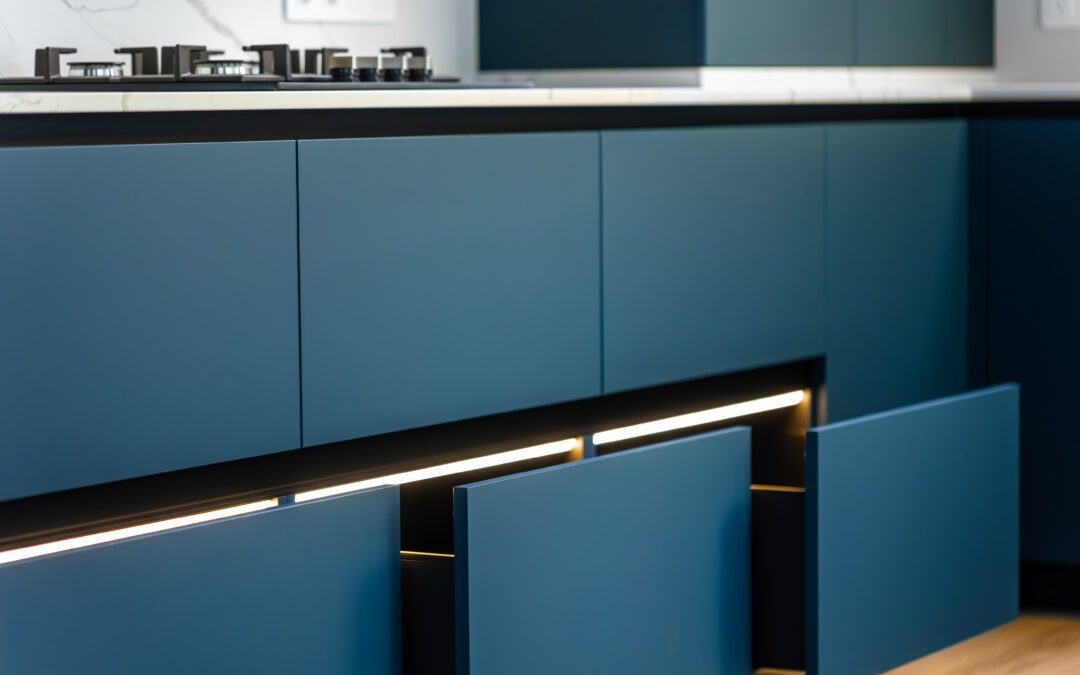
Ah, Sunnyvale! Where palm trees sway, Bay breezes tease, and home remodeling dreams ride the crest like seasoned surfers. But while California living is all sunshine and style, your cabinets can end up fighting one sneaky enemy—humidity. That extra moisture in the air can make some materials warp, swell, or just cry uncle. Choosing the best cabinet materials for coastal California is trickier than guessing traffic on El Camino Real during rush hour.
One quick reality check: Sunnyvale isn’t oceanfront, but it still gets the Bay Area mix of moisture, temperature swings, steamy kitchens and baths, and seasonal ventilation patterns that can be rough on cabinets over time. Homes near open windows, patio doors, leaky plumbing, or sunny exposures can see the same cabinet trouble coastal homeowners worry about—swelling, peeling finishes, rusting hardware, and weak cabinet boxes.
If you’re eyeing a kitchen or bathroom makeover, you’re probably tossing Plywood, MDF, or Thermofoil around in your head like surfboards on a van roof. Which material can stand up to humid air, steam, saltier breezes, warm afternoons, and still look sharp enough to impress your weekend BBQ crowd? Grab your board shorts—okay, maybe just your coffee—and let’s chat cabinets.
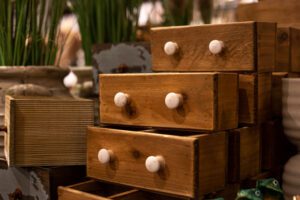
Close-up, wooden boxes for the house, detail of home decor, jewelry boxes.
The Big Three: Plywood, MDF, and Thermofoil
Before we wax poetic (pun intended), let’s lay out what these materials really are. And don’t worry—no need for a PhD in Carpentry.
Plywood: The Old Reliable
Plywood is a sandwich, but not the soggy kind you forget in the car. It’s made of thin layers of wood veneer, glued together with the grain crisscrossed for strength. Think of it like the superhero of wood materials—tough, flexible, but not invincible.
How It Handles Moisture in Sunnyvale
Picture a plywood cabinet in a kitchen just after a round of boiling spaghetti. The air is thick with steam and humidity is rising. Plywood shakes it off better than most. Those glue layers and crisscrossed grains help it stay tough, fighting off warping and swelling. Compared to solid wood, plywood acts like it’s on a moisture diet—less expansion and contraction. That’s gold when Bay moisture, foggy mornings, or damp air roll in.
Upkeep Tips for Plywood Cabinets
- Seal the Deal: Make sure every cut edge is sealed. Bare edges are like open doors for moisture.
- Wipe Down: Spills? Clean ‘em up fast, just like you’d grab your surfboard in high tide.
- Ventilate: Use exhaust fans when boiling or showering. Plywood holds up, but even superheroes need a little backup.
MDF: Smooth Operator with a Weak Spot
MDF, or Medium Density Fiberboard, is what you get if you take wood fibers, glue them together with resin, and send them on a date with a hot press. The result? Super-smooth boards, ideal for painted cabinets or doors where you want that ultra-clean look.
How MDF Takes on Humidity in Coastal California
Here’s the rub: MDF loves water about as much as a cat loves bath time. Even a little moisture can make MDF swell, bubble, or get soft in the middle, much like how a wet beach towel gets heavy and droopy. Every cut or drilled hole acts like an open invitation for water to sneak in. In places with higher humidity, MDF might be fine for painted door fronts or shelves in drier spots, but for sink bases or bathroom vanities? That’s rolling the dice.
There is such a thing as moisture-resistant MDF, and it’s a better option than standard MDF when you want a painted look. Still, it usually doesn’t beat a well-built plywood cabinet box in wet or high-use areas.
Upkeep Tips for MDF Cabinets
- Paint or Seal: MDF needs a good coat of paint or laminate, everywhere. No naked boards—imagine sending a sunburned tourist to the Santa Cruz Boardwalk with no sunscreen.
- Avoid Leaks: Fix any plumbing drips quickly.
- Keep Dry: Always wipe up water right away.
Thermofoil: The Waterproof Wonder?
Thermofoil sounds like something from a superhero comic, but it’s actually a vinyl layer heat-pressed onto MDF. The surface is smooth and shiny—sometimes mimicking real wood so well, you have to squint. Thermofoil cabinets are popular for their easy-to-clean, no-muss, no-fuss vibe.
Thermofoil vs. Humidity
On a sunny kitchen day, Thermofoil can laugh at humidity. Spills bead up and wipe off easily. But like any superhero, it’s got a Kryptonite. If the vinyl layer peels or cracks (usually around doors or close to your oven’s hot spots), water can sneak underneath, setting its sights on the MDF core. Once that happens, swelling and bubbling aren’t far behind. But as long as the Thermofoil stays stuck, moisture’s got nowhere to go.
Upkeep Tips for Thermofoil Cabinets
- Stay Cool: Avoid putting too much heat near the doors. Install heat shields next to ovens.
- Wipe, Don’t Wait: Clean up spills while humming your favorite tune.
- Check the Seams: If you notice peeling or bubbling, call a pro before things get worse.
Cabinet Box Quality Matters Just as Much as the Material
Here’s where a lot of homeowners get tripped up: the door style gets all the attention, but the cabinet box is what takes the daily beating. In humid or coastal-adjacent conditions, a strong cabinet box often matters more than the pretty face on the front.
Plywood boxes are usually the safest bet because they hold screws well, resist swelling better than cheaper engineered cores, and tend to last longer under sinks, near dishwashers, and in bathrooms.
Particle board or low-density engineered cores are where problems often start. They’re budget-friendly, but they can sag, crumble at fasteners, and swell badly if water gets in. Near the coast—or even in a Sunnyvale home with lots of cooking steam, open windows, or a small plumbing leak—particle board cabinet boxes are usually the first to wave the white flag.
If you’re comparing quotes, don’t just ask, “What do the doors look like?” Ask what the box sides, back panels, shelves, and sink base are made of. That answer tells you a lot about long-term durability.
What About Solid Wood?
Solid wood deserves a quick cameo here because people naturally assume “real wood” must be best. Sometimes it is—but not automatically.
Solid wood can look beautiful and last a long time, especially for cabinet doors, face frames, and decorative details. The catch is that wood naturally expands and contracts with moisture changes. In homes that swing between damp mornings, warm afternoons, cooking steam, and dry indoor heat, solid wood can move more than plywood.
That’s why one of the most common best-practice combinations is solid wood doors with plywood cabinet boxes. You get the beauty of wood where it shows, plus the stability of plywood where the structure matters most.
Can solid wood work in coastal California? Sure—if it’s properly finished, maintained, and installed in a well-ventilated home. But for pure moisture stability, plywood usually wins the practical contest.
Comparing the Three: Who Wins in Humidity?
Let’s do a side-by-side, like checking out rival barbecue joints.
- Handles Moisture: Plywood – Very well | MDF – Struggles | Thermofoil – Good (if intact)
- Lasts in Coastal Air: Plywood – Strong | MDF – Can fail fast | Thermofoil – Great (if sealed)
- Surface Options: Plywood – Paint, Veneer | MDF – Paint only | Thermofoil – Pre-finished
- Price: Plywood – $$ | MDF – $ | Thermofoil – $$
- Repairs: Plywood – Easy | MDF – Tough | Thermofoil – Tricky
- Screw-Holding Strength: Plywood – Strong | MDF – Fair | Thermofoil – Depends on MDF core
- Long-Term Value: Plywood – High | MDF – Lower in wet zones | Thermofoil – Moderate
The Verdict?
In Sunnyvale’s moisture-prone conditions, plywood is your MVP—solid under pressure, flexible, and will take a splash or two like a pro. Thermofoil’s not far behind, but you’ll need to watch those edges and stay on top of repairs. MDF is the “looks good in pictures” candidate, but if you don’t baby it, humid weather will have it waving the white flag.
Coastal Conditions Aren’t Just About Humidity
Humidity gets the headlines, but cabinets in coastal California deal with a whole team of troublemakers:
- Salt air: Even inland Bay Area homes can see faster wear on hinges, drawer slides, and pulls if windows stay open often or the home gets damp air movement.
- Temperature swings: Warm afternoons and cooler nights can stress finishes and seams over time.
- UV and sunlight: Cabinets near big windows or glass doors can fade, yellow, or dry unevenly.
- Moisture near windows and doors: Condensation, wind-driven dampness, and wet traffic from patios can all affect lower cabinets.
- Seasonal occupancy and ventilation: Homes left closed up, or homes with weak exhaust fans, often trap moisture longer than people realize.
That’s why the best cabinet materials for coastal homes aren’t just about the board itself—they’re about the whole system: box construction, finish, hardware, and installation quality.
Finish Matters as Much as the Core
Here’s a truth contractors learn fast: even a good cabinet material can fail if the finish system is weak. In humid or coastal-adjacent homes, the finish is your cabinet’s rain jacket.
- Painted finishes: Great for style, but they need proper primer and full coverage on edges, corners, and cutouts.
- Conversion varnish or catalyzed coatings: These tougher factory-applied finishes generally hold up better against moisture, cleaning, and wear than basic paint alone.
- UV-stable coatings: Helpful near sunny windows where fading or yellowing is a concern.
- Laminate and thermofoil: Easy to clean and moisture-resistant on the surface, but vulnerable if seams open or heat causes peeling.
- Sealed interiors: Don’t ignore the inside of the cabinet, especially under sinks. Interiors, edges, toe kicks, and plumbing cutouts should all be protected.
If you remember one thing, make it this: a plywood cabinet with sloppy finishing can still get into trouble, while a well-finished cabinet has a much better shot at a long, good-looking life.
Best Cabinet Materials by Room and Trouble Zone
Not every cabinet in the house faces the same battle. Here’s the quick-draw version by location:
- Sink base cabinets: Go with plywood, ideally with a fully sealed interior and reinforced bottom. This is one of the worst places for MDF or particle board.
- Near ovens and ranges: Plywood boxes with heat protection are safer than thermofoil doors right next to heat sources.
- Bathrooms and vanities: Plywood is the safer all-around pick. Moisture-resistant MDF can work for painted doors, but the box should still be tough and well sealed.
- Laundry rooms: Plywood or high-quality laminate/PVC options make sense where steam, detergents, and occasional leaks are in play.
- Drier locations: MDF may be acceptable for certain painted components in low-moisture areas if the budget is tight and the finish is excellent.
- High-moisture or splash-prone areas: Consider marine-grade or exterior-grade plywood as a premium upgrade path.
For homeowners wanting a modern alternative, laminate or PVC-based cabinetry can also be worth a look in especially damp spaces. They’re not the right fit for every design style, but they’re part of the current conversation because they resist moisture well.
Marine-Grade and Exterior-Grade Plywood: Worth It?
If your cabinets are going into a particularly wet environment—or you just want the belt-and-suspenders option—marine-grade or exterior-grade plywood can be a meaningful upgrade.
These premium plywoods are built with more water-resistant adhesives and tighter construction standards than bargain panels. They’re not magic, and they still need proper finishing, but they can offer extra peace of mind for sink bases, laundry rooms, beach-close properties, or homes where ventilation isn’t ideal.
For many Sunnyvale remodels, standard high-quality plywood is enough. But if you’re building for maximum durability, this is one of those upgrades that can make sense in the wettest zones.
Stories from the Coast: Real-Life Cabinet Adventures
- Meet Joe, a chef who loves his spaghetti but hates cabinet maintenance. He went for Thermofoil in the kitchen. Six months in, his oven started toasting more than dinner—the doors near the oven began bubbling. Joe called a pro right away. A little heat shield and careful cleanup kept the problem from spreading, but now Joe swears by “oven mitts for cabinets.”
- Then there’s Maria, who went plywood all the way. Her cabinets have weathered two stove top soup disasters and daily beach towel chaos, still standing strong. She jokes that her cabinets have “surfboard DNA.”
- And Sam, a DIY hero, picked MDF for the basement bathroom, painted it sky blue, and didn’t seal the bottoms well. Within a year, the boards swelled like marshmallows—it wasn’t pretty. He’s now team plywood, after a weekend of cabinet replacement.
How To Choose: Quick-Draw Decision Guide
But wait! Before rushing to the hardware store or giving your cabinets the old “out with the old” treatment, think about these:
- Location, Location, Location
- Is this cabinet near the sink or shower? Go plywood or sealed Thermofoil.
- In a tucked corner, far from wet feet? MDF might be fine.
- Your Budget
- Plywood and Thermofoil usually cost a bit more than MDF. But fixing ruined cabinets? That adds up quickly.
- Looks Matter
- Want to paint your own colors? MDF is smooth as glass, but plywood painted well can look just as sharp.
- If you want easy-clean, glossy surfaces, Thermofoil wins.
- Repair Factor
- Plywood can be patched or sanded. Thermofoil repairs can get messy; MDF often needs a full replacement.
- Longevity
- If you want cabinets that hold up for years and support resale value, plywood usually gives the best long-term return.
What To Inspect Before You Order Cabinets
Showroom samples can be sneaky. A cabinet may look gorgeous from five feet away and still be built like a beach umbrella in a windstorm. Before ordering, check these details:
- Sealed edges: Especially on sink bases, bottoms, and cutouts.
- Back panel quality: Thin backs can weaken the whole cabinet.
- Joinery: Ask whether the cabinet uses strong joinery and quality fasteners, not just staples in all the wrong places.
- Screw-holding strength: Important for hinges, drawer slides, and long-term door alignment.
- Shelf thickness and support: Sagging shelves are a red flag.
- Sink-base construction: Ask how the interior is protected from leaks and cleaning products.
- Finish coverage: Are the interiors, edges, and drilled openings sealed?
Good questions to ask your cabinet supplier or installer:
- Are the cabinet boxes plywood, particle board, or another core?
- Is there a moisture-resistant option for wet areas?
- What finish system is used—basic paint, catalyzed finish, conversion varnish?
- Are the sink base and cut edges fully sealed?
- What hardware is included, and is it corrosion-resistant?
- What do you recommend for cabinets near ovens, windows, and bathroom moisture?
Extra Survival Tips for Coastal Cabinets
1. Always Ventilate
Think of your exhaust fan as a lifeguard for your cabinets—it whisks away steamy air. Run it whenever you cook or shower. You’d be surprised how much moisture it can clear out.
2. Seal the Edges
Any cut edge is an invitation for trouble—like leaving cookies out for seagulls. Seal those puppy up with paint, varnish, or specialty tape.
3. Watch Plumbing Like a Hawk
A small drip under your sink can add up fast—a drip here and there is trouble for all cabinet types, especially MDF and Thermofoil. Check your pipes often.
4. Wipe Up Spills—Pronto
Don’t wait for “later.” Liquids left behind warp wood, swell up fiberboard, and can even help mold crash the party.
5. Protect from Heat
For Thermofoil, a heat shield near your oven or toaster can stop bubbling and melting. Some simple aluminum tape can also help reflect heat.
6. Don’t Forget Hinges and Hardware
Rusty hinges can add moisture to your problems. Stainless steel holds up better on the coast. Better yet, ask for corrosion-resistant hinges, drawer slides, and pulls—especially in kitchens, baths, and homes that stay open to damp air. Stainless or marine-grade hardware can be worth the upgrade, and quality soft-close hardware tends to perform better over time in humid conditions.
Quick Repair Tricks (and When to Call iBuilders Design and Build)
Let’s face it—stuff happens. But you don’t have to panic when it does.
- Small Bubbles in Thermofoil? Use a hairdryer to soften the vinyl, then press it down gently. If it’s big, or won’t stay, call a pro.
- Peeling Paint on MDF? Sand, prime with a moisture-blocking primer, repaint, and seal every edge.
- Swollen Cabinets? Sometimes you can dry them out and sand them smooth, but bad swelling usually means replacement.
And when cabinets are waving goodbye or looking like they survived a thousand surf lessons, it might be time for the pros.
FAQ: Best Cabinet Materials for Coastal California
What is the best cabinet material for humid climates?
For most homes, plywood is the safest all-around choice because it resists moisture better than MDF or particle board and holds fasteners well over time.
Are particle board cabinets bad near the coast?
They’re usually not the first choice. Particle board is more vulnerable to swelling, sagging, and screw failure if moisture gets in, which makes it a weaker option for humid or coastal environments.
What finish is best for coastal cabinets?
A durable, well-applied finish matters a lot. Catalyzed finishes, conversion varnish, and fully sealed painted systems generally outperform thin or incomplete coatings. The key is sealing edges, interiors, and cutouts—not just the visible front.
Do coastal kitchens need special hardware?
It’s a smart upgrade. Corrosion-resistant or stainless hardware helps hinges, drawer slides, and pulls last longer in damp or salty air. Soft-close hardware from a quality brand also tends to age better.
How do you protect cabinets from humidity?
Use exhaust fans, fix leaks quickly, wipe up spills, seal exposed edges, protect cabinets from direct heat, and choose strong box materials with durable finishes and hardware.
Final Thoughts: The Cabinets That Can Surf
Sunnyvale’s not just a zip code—it’s a challenge for builders who understand Bay Area moisture, steam, sunlight, and the wear that everyday life puts on cabinets. Choosing the right cabinets for your kitchen or bathroom may sound like a small thing, but when humidity’s in the air, picking the right materials will save you cash, headaches, and maybe even your next big Lasagna Night.
Plywood stands strong, lasting years with a little upkeep. Thermofoil looks slick, as long as you keep it cool and watch those seams. MDF is the budget pick, but needs kid-glove treatment and perfect sealing. And if you really want cabinets built for the long haul, pay attention to the whole package: cabinet box quality, finish system, hardware, and installation—not just the label on the door.
Ready to give your kitchen or bathroom a facelift built for the coast? iBuilders Design and Build is your Sunnyvale neighbor, with the experience to help your cabinets handle every steamy, salty day our weather can throw at them. Our team takes the stress out of remodeling, offering advice, perfect installations, and repairs done right the first time. Built to withstand—so your cabinets stay sharp and sturdy, no matter what the weather does.
Don’t let humidity make a mess of your home! Call iBuilders Design and Build at 650-668-1658 or visit https://ibuilderspro.com/ for a free consultation and see how sturdy, beautiful cabinets can transform your space. Let’s build something that stands the test of time—and moisture!